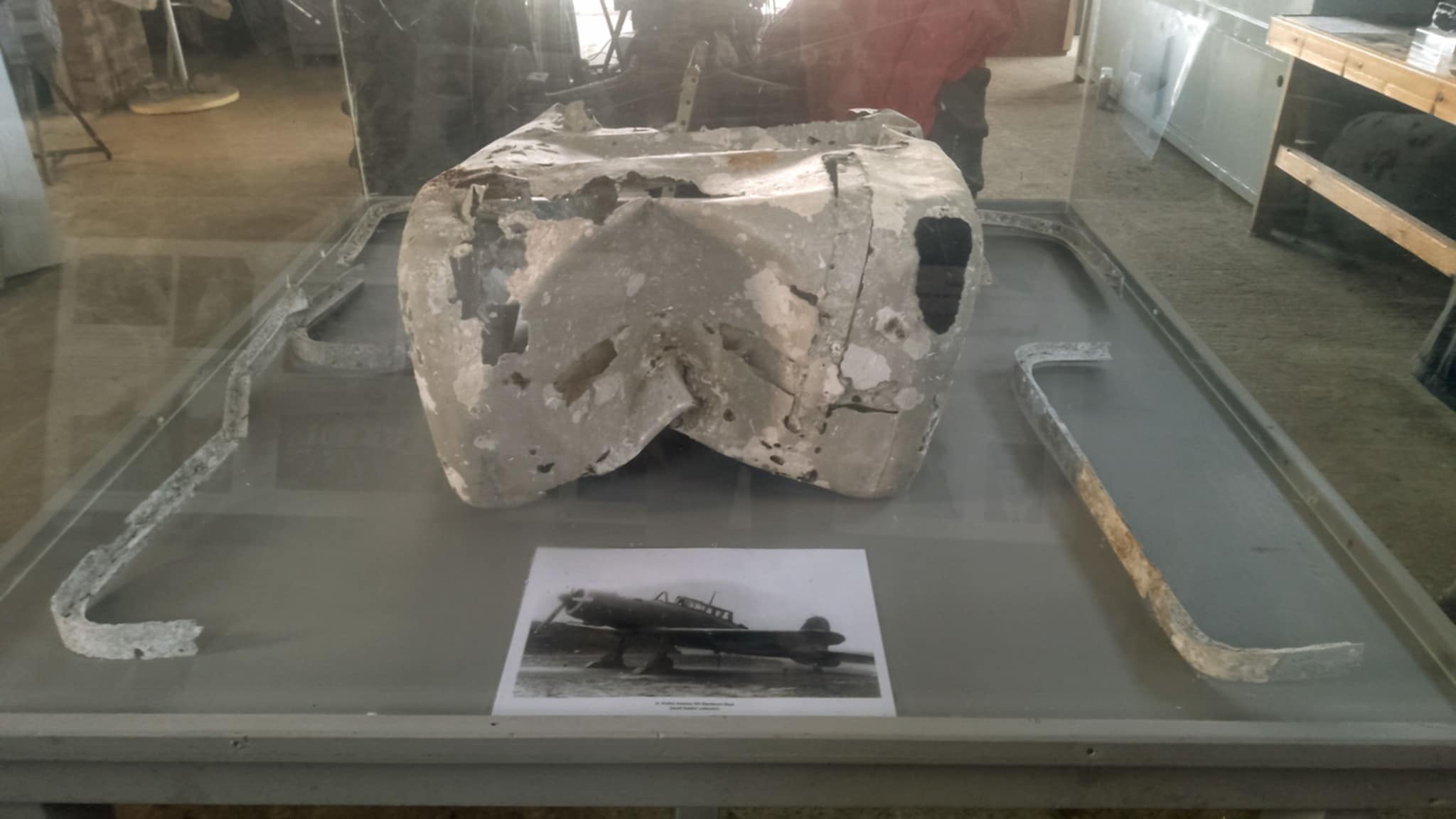
The collection of World War II artefacts at HMS Tern includes a fuel tank from a Blackburn Skua aircraft that crashed into Scapa Flow during the Second World War.
Unfortunately, specific details about this particular aircraft remain scarce, adding an air of mystery to its history. However, it is documented that a similar Blackburn Skua took off from HMS Tern and met a tragic fate when it crashed into the ground at Houton Head on August 27, 1942. This tragic incident claimed the lives of Pilot F. L. K. W. Nias and his Tactical Air Gunner, Leading Aircraftman Alfred L. Fletcher, both of whom displayed extraordinary bravery in their service.

Moreover, the history of the Blackburn Skua is marked by further sorrow, as another aircraft of the same model also crashed on January 11, 1940. This incident resulted in the untimely deaths of Midshipman John D. W. Barr and Leading Airman G. E. Uren. These incidents highlight the perilous nature of aerial combat during World War II and remind us of the human cost of conflict, as brave servicemen risked their lives for their country. Through the artefacts preserved at HMS Tern, the stories of these individuals and their sacrifices continue to live on.
The Blackburn Skua was an aircraft developed for the Royal Navy, serving as both a carrier-based fighter and a dive bomber during World War II. Its design prioritised long-range operations over open waters, which was essential for missions far from land-based support. To optimise its performance, the Skua incorporated a sophisticated distributed fuel system, enabling the aircraft to achieve a delicate balance between extended endurance and the necessary stability for its challenging flight operations. The design not only enhanced its operational range but also ensured a degree of survivability in the face of enemy fire, making the Skua a versatile aircraft in maritime warfare.
The aircraft’s poor top speed and rate of climb severely limited its effectiveness as a fighter. By 1941, the Skua was removed from frontline operations and was instead used in secondary roles, such as training and target towing duties.
Fuel was carried in several tanks positioned throughout the aircraft. The main fuel tanks were located within the fuselage between the pilot and rear gunner, providing the primary fuel supply while maintaining the aircraft’s centre of gravity as fuel was used. A smaller auxiliary tank, positioned just ahead of the pilot, held approximately 39 imperial gallons (177 litres). Some sources also suggest that additional fuel storage may have been incorporated within the wings.
Together, these tanks gave the Skua the range needed for patrol and strike missions over the North Sea and Norwegian waters, where long distances and harsh conditions were routine.
Source: ORKNEY LAND SITES – CRASHSITEORKNEY, Wiki Commons
Leave a Reply